| Main | Contact | Cottage | Links | Cartoons | Novels | Family |
Background phoito by Alex Atwood
|
|
|
|
| |
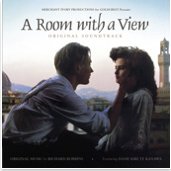 |
Giacomo Puccini 1858-1924Giacomo Antonio Domenico Michele Secondo Maria Puccini was born in
Lucca Italy. "Che gelida manina" from La bohème, and "Nessun dorma" from Turandot, have become part of popular culture. from the movie "A room with a View" sang by
Kiri Te Kanawa |
|
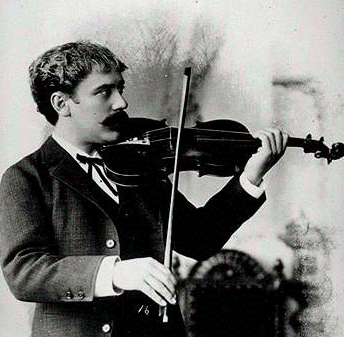
Pablo Martín Melitón de Sarasate y Navascués 1844 – 1908Pablo Sarasate was born in Pamplona, Spain, the son of an artillery bandmaster. He began studying the violin with his father at the age of five and he appeared in his first public concert in La Coruña at the age of eight. His artistic pre-eminence was due principally to the purity of his tone, and to that impressive facility of execution that made him a virtuoso. George Bernard Shaw once declared that though there were many composers of music for the violin, there were but few composers of violin music.
Pablo de Sarasate - Spanish Dance for Violin and Piano Zapateado |
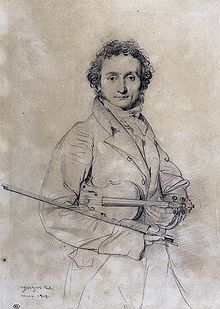 |
Niccolò Paganini 1782 – 1840Paganini was born in Genoa, Italy, the third of the six children of Antonio and Teresa (neé Bocciardo) Paganini. Paganini's father was an unsuccessful trader, but he managed to supplement his income through playing music on the mandolin. At the age of five, Paganini started learning the mandolin from his father, and moved to the violin by the age of seven. During his public career, the violin parts of the concertos were kept secret. Paganini would rehearse his orchestra without ever playing the full violin solos Paganini developed the genre of concert variations for solo violin, characteristically taking a simple, apparently naïve theme, and alternating lyrical variations with a ruminative, improvisatory character that depended for effect on the warmth of his phrasing, with bravura extravagances that left his audiences gasping. His health deteriorated due to mercury poisoning by the mercury compound used at that time to treat syphilis. The disease caused him to lose the ability to play violin, and he retired in ca.1834. Niccolo Paganini - Movimento Perpetuo
|
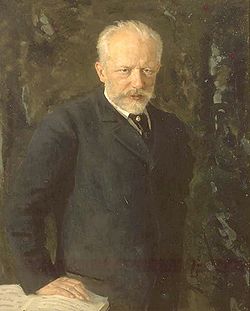 |
Pyotr Ilyich Tchaikovsky 1840 – 1893Tchaikovsky was born in Votkinsk, a small town in present-day Udmurtia
(Russia). His father, Ilya Petrovich, was the son of a government mining
engineer,of Ukrainian descent. Tchaikovsky began piano lessons at age four
with a local woman. However, his parents' passion for his musical talent
soon cooled. Feeling inferior due to their humble origins, the family sent
Tchaikovsky in 1850 to a school for the "lesser nobility" in St.
Petersburg to secure him a career as a civil servant. The possibility that
Tchaikovsky was gay has been inferred from the composer's own writings as
well as those of his brother Modest. Tchaikovsky sought expressive value
in music that was immediately comprehensible and appreciable a sweet,
inexhaustible, supersensuous fund of melody ... touched with neuroticism,
as emotional as a scream from a window on a dark night. The violin is
no longer played: it is tugged about, torn, beaten black and blue.
Tchaikovsky's death has traditionally been attributed to cholerA. However,
some have theorized that his death was a suicide. Pjotr Ilyich Tchaikovsky - Serenade For String Walzer
|
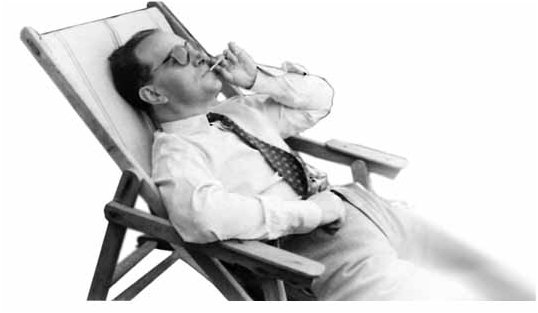 |
Joaquín Rodrigo Vidre, Marqués de los Jardines de Aranjuez1901 – 1999Joaquín Rodrigo (Sagunto (Spain) 22 November 1901 – Madrid (Spain) 6 July 1999), was a composer of classical music and a virtuoso pianist. Despite being nearly blind from an early age, he achieved great success. Rodrigo's music counts among some of the most popular of the 20th century, particularly his Concierto de Aranjuez, considered one of the pinnacles of the Spanish music and guitar concerto repertoire. |
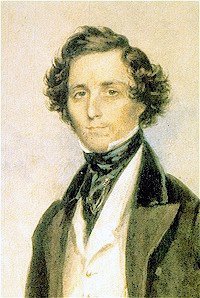 |
Jakob Ludwig Felix Mendelssohn Bartholdy 1809 – 1847Mendelssohn was born in Hamburg, Germany, the son of a banker, Abraham Mendelssohn , to a notable Jewish family which later converted to Christianity. The family moved to Berlin in 1811. Abraham and Lea Mendelssohn sought to give Felix, his brother Paul, and sisters Fanny and Rebecca, the best education possible. Mendelssohn was regarded as a child prodigy. He began taking piano lessons from his mother when he was six, and at seven was tutored by Marie Bigot in Paris. From 1817 he studied composition with Carl Friedrich Zelter in Berlin. He probably made his first public concert appearance at the age of nine Between the ages of 12 and 14, Mendelssohn wrote twelve string symphonies. In 1824, at age 15, he wrote his first symphony for full orchestra (in C minor, Op. 11). In 1842 he wrote the famous Wedding March to Shakespeare's play "A Midsummer Night's Dream". Mendelssohn's own works show his study of Baroque and early classical music. His fugues and chorales especially reflect a tonal clarity and use of counterpoint. Charles Rosen, in his book The Romantic Generation disparages Mendelssohn's style as "religious kitsch" Felix Mendelssohn - Violin Concerto in E Minor OP64 III Felix Mendelssohn - Songs Without Words
|
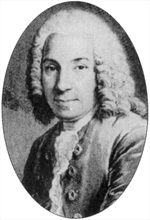 |
Carl Philipp Stamitz 1745 - 1801Was born in Mannheim Germnany He was trained at Mannheim by his father Johann Stamitz and others, and joined the court orchestra in 1762. In 1770 he went to Paris, where, as a violinist, viola and viola d'amore player, he gave concerts. Probably in the late 1780s, Stamitz married Maria Josepha Pilz, who was 19 years his junior. The newlyweds settled in Greiz, Germany. Maria was in frail health after the birth of a son in 1790 and a daughter two years later, and Stamitz thus had to curtail his travels. He made a meager living selling his compositions to the King of Prussia and to royalty at smaller courts. writing more than 50 symphonies, 38 symphonies concertantes and 60 concertos. Notable for its leisurely lyricism, his music combines Mannheim conventions with foreign features such as an Italian three-movement pattern in symphonies and a frequent use of rondos in finales. Carl Philipp Stamitz - Violin Cocerto 2D major Carl Philipp Stamitz - Celloconcert nro 1 G major Carl Philipp Stamiz - Concerto for Klarinet, Romance
|
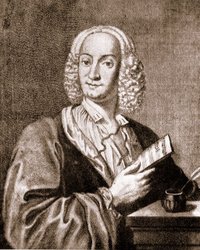 |
Antonio Lucio Vivaldi 1678 – 1741Vivaldi was born in Venice, the capital of the Republic of Venice (Italy). He was baptized immediately after his birth at his home by the midwife most likely due to his poor health or to an earthquake that shook the city that day. Vivaldi had a medical problem probably some form of asthma. But that did not prevent him from learning to play the violin, composing. At the age of 15 in the year of 1693, he began studying to become a priest. In 1703, at the age of 25, Vivaldi was ordained a priest and was soon nicknamed il Prete Rosso, "The Red Priest", probably because of his red hair. In September 1703, Vivaldi became maestro di violino (master of violin) at an orphanage called the Pio Ospedale della Pietà in Venice. In 1725 he wrote the Four Seasons, four violin concertos depicting natural scenes in music. Vivaldi's life, like those of many composers of the time, ended in financial difficulties. His compositions no longer held the high esteem they once did in Venice. He wished take up the position of a composer in the Imperial Court of Charles VI in Vienna. But shortly after Vivaldi's arrival king Charles died. This left the composer without royal protection and a source of income. Vivaldi died not long after and was buried in a simple grave at the Hospital Burial Ground in Vienna. Many of Vivaldi's compositions reflect a flamboyant, almost playful, exuberance.Vivaldi's music is innovative, breaking a consolidated tradition in schemes. He gave brightness to the formal and the rhythmic structure of the concerto, repeatedly looking for harmonic contrasts and innovative melodies and themes. The Four Seasons, was unknown in its original edition. In the early 20th century, Fritz Kreisler's concerto in the style of Vivaldi, which he passed off as an original Vivaldi work, helped revive Vivaldi's reputation. Antonio Vivaldi - Spring' from 'The Four Seasons Antonio Vivaldi - Winter' from 'The Four Seasons Antonio Vivaldi - Antonio Vivaldi - Sinfonia In C Major
|
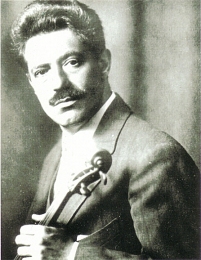 |
Fritz Kreisler 1875 – 1962Austria-born American violinist and composer; http://upload.wikimedia.org/wikipedia/en/3/3a/Kreisler.jpg Kreisler was born in Vienna to a Jewish father and a Roman Catholic mother. He studied at the Vienna Conservatory and in Paris, Kreisler owned several antique violins by luthiers like Antonio Stradivari.He briefly served in the Austrian Army in World War I before being honourably discharged after he was wounded. He spent the remaining years of the war in America. He returned to Europe in 1924, living first in Berlin, then moving to France in 1938. Shortly thereafter, at the outbreak of World War II, he settled again in the United States for good. He was in an automobile accident that caused him to spend his last days blind and deaf, According to Archbishop Fulton J. Sheen who visited him frequently in the hospital "he radiated a gentleness and refinement not unlike his music," He is noted for his sweet tone and expressive phrasing. Like many great violinists of his generation, he produced a characteristic sound, which was immediately recognizable as his own.
|
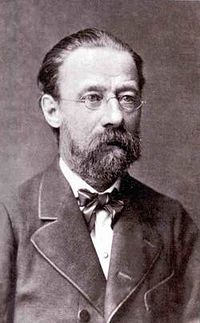 |
Bedrich Smetana 1824 - 1884Smetana was the son of a brewer in Litomyšl in Bohemia, then part of the Austrian Empire (today the Czech Republic). Smetana attended a high school in Pilsen from 1840-1843. He studied music in Prague, despite initial resistance from his father. He secured a post as music master to a noble family, and in 1848 received funds from Franz Liszt to establish his own music school. In 1855 his second child, his beloved four-year-old daughter Bedriška died. When his third child died nine months later, he committed himself to composition, In 1882 Smetana suffered from progressive neurological illness. After he suffered a stroke-like seizure, doctors forbade him to compose. Against these orders he composed his final, incomplete, opera, Viola. In 1884 he was taken to the Prague Lunatic Asylum, where he died soon afterwards. Smetana was the first composer to write music that was specifically Czech in character based on Czech themes and myths. He used many Czech dance rhythms and his melodies sometimes resemble folk songs, though he was proud of not directly quoting folktunes for the most part.
Franz Liszt - Liebestraum Op3 In A Flat
|
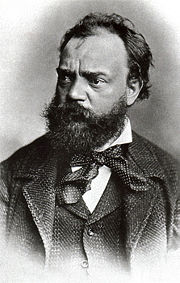 |
Antonín Leopold Dvořák 1841 – 1904Dvořák was born in Nelahozeves, near Prague then part of the Austrian Empire (today the Czech Republic), His father František was a butcher, innkeeper, and professional player of the zither. From 1857 to 1859 he studied music in Prague's only Organ School, and gradually developed into an accomplished player of the violin and the viola Throughout the 1860s he played viola in the Bohemian Provisional Theater Orchestra, which from 1866 was conducted by Bedrich Smetana. Dvořák supplement his income by teaching and fell in love with one of his pupils Josefína Cermáková who unfortunayely married another man. Dvorák however married Josefínas sister, Anna. They had nine children together. Had attracted the attention of Johannes Brahms, whom he later befriended. Brahms contacted the musical publisher Simrock, who as a result commissioned Dvořák's first set of Slavonic Dances. Published in 1878, these were an immediate success. In 1891 Dvořák received an honorary degree from the University of Cambridge. From 1892 to 1895, Dvořák was the director of the National Conservatory of Music in New York City Dvořák employed the idioms and melodies of the folk music of Moravia and his native Bohemia. Smetana was a great influence on Antonín Dvořák, who similarly used Czech themes in his works. Antonín Dvořák - Humoresque in G-Flat Major
|
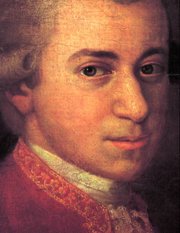 |
Johann Chrysostom Wolfgang Amadeus Mozart 1756 - 1791Mozart was born in Salzburg Austria into a musical family and showed indications of prodigious abilities at a very young age. When he was five years old, he could both read and write music and had precocious skills as a keyboard and violin player. Mozart was - in spite of his relatively short life - a productive and influential composer of the Classical era. His more than 600 compositions are acknowledged as pinnacles of clasical music. He is still popular and beloved more than two centuries after his death, his talent remains unsurpassed. He fashioned a style that ranged in mood from the light and pleasant to the dark and violent, from a vision of humanity "redeemed through art, forgiven, and reconciled with nature and the absolute".His influence on all subsequent classical music has been profound. In 1777 Mozart had a cwarel with his employer Archbishop Colloredo and decided to leave Salzburg to a job-hunting tour. In Mannheim Mozart fell in love with Aloysia Weber, one of four daughters in a musical family. In 1782, he married one of the sisters Constanze Weber against the wishes of his family; six children were born, of whom two survived infancy. He spent the rest of his busy life in Vienna, where he achieved relative fame. However, his finances remained precarious, with periods of prosperity and of powerty.He also enjoyed billiards and liked dancing. He kept pets like a canary, a dog and a horse. Mozart's last year was, until his final illness struck, one of great productivity. During this time Mozart wrote a great deal of music, including some of his most admired works like the opera "The Magic Flute". Wolfgang Amadeus Mozart - Piano Sonata 11 In A K331 Wolfgang Amadeus Mozartt - Serenade Op13 K 525 Wolfgang Amadeus Mozart - Horn Concerto No4 Wolfgang Amadeus Mozartt - Quartet For Flute & String
Wolfgang Amadeus Mozart - Zauberflöte Der Hölle Rache Kocht
* sang by Gundula Janowitz
|
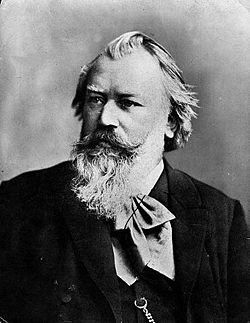 |
Johannes Brahms 1833 – 1897German composer of the Romantic period. He was born in Hamburg and in his later years he settled in Vienna, Austria. Along with Johann Sebastian Bach and Ludwig van Beethoven. Brahms is often considered among the greatest and most influential composers of all time. Johannes Brahms - Hungarian Dance Johannes Brahms - Synphony no 3 Poco allegretto Johannes Brahms - Lullably OP 49 No4 Johannes Brahms - Johannes Brahms - Waltz In A Flat Op 39 1
|
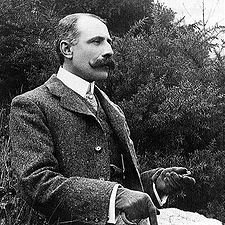 |
Sir Edward William Elgar, 1st Baronet 1857 – 1934Elgar was an English Romantic composer. Several of his first major orchestral works, including the Enigma Variations and the Pomp and Circumstance Marches, were greeted with acclaim. He was appointed Master of the King's Musick in 1924. Edward Elgar - Chanson de Matin Op 15 #2
|
 |
Edvard Hagerup Grieg 1843 – 1907Norwegian composer and pianist. He is best known for his
incidental music to Edvard Grieg - Morning from Peer Gynt
|
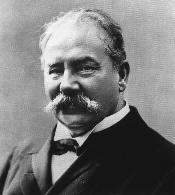 |
Johan Severin Svendsen 1840 – 1911Born in Christiania Oslo, Norway, he lived most his life in Copenhagen, Denmark. Svendsen’s style, though romantic, shows elements of Norwegian folk music. Johann Svendsen - Allt Under Himmelens Faste
|
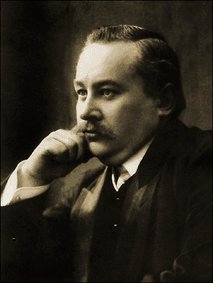 |
Oskar Merikanto 1868 – 1924He was born to Swedish-speaking parents in Helsinki Finland. His father, originally Frank Mattsson, changed the family name to sound more Finnish. Merikanto was notable for his variety of talents – he gave concerts all around Finland, performing on the piano and organ, conducting orchestras, and composing original music. One of his most beloved compositions is the "Summernights Waltz". At his time Merikanto was considerd to be too amateur and popular to be taken as a serious composer. Oskar Merikanto - Summer Nights Waltz
|
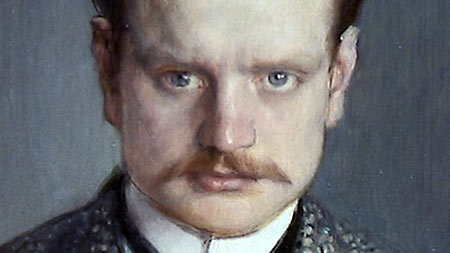 |
Johan Julius Christian Jean Sibelius 1865 – 1957One of the most notable composers of the late 19th and early 20th centuries. Sibelius was born into a Swedish-speaking family in Hämeenlinna in the Russian Grand Duchy of Finland, the son of Christian Gustaf Sibelius and Maria Charlotta Sibelius. During his student years he began using the French form of his name, "Jean". His music played an important role in the formation of the Finnish national identity when struggling to be an independent country. Jean Sibelius - Karelia Suite Op11 Jean Sibelius - Finlandia Op 26
|
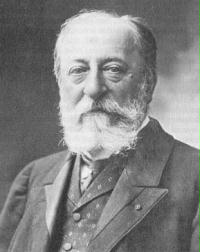 |
Camille Saint-Saëns 1835 - 1921Saint-Saëns was born in Paris France. His father, a government clerk, died
three months after his birth. His mother, Clémence, sought the assistance
of her aunt, Charlotte Masson. Masson moved in and introduced Saint-Saëns
to the piano. He had learned to read and write by age three and mastered
Latin by seven. Camille Saint-Saëns - The Swan Camille Saint-Saëns - Romance Op.36 for cello
|
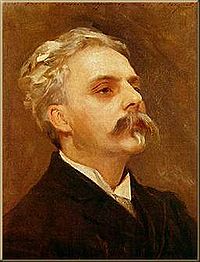 |
Gabriel Urbain Fauré 1845 - 1924Fauré was born in Pamiers, Ariège, Midi-Pyrénées,in France to
Toussaint-Honoré Fauré and Marie-Antoinette-Hélène Lalène-Laprade. He was
sent to live with a foster-nurse for four years. At the age of nine he was
sent to study at the École Niedermeyer, a school which prepared church
organists and choir directors in Paris for 11 years. In 1883, Fauré
married Marie Fremiet, with whom he had two sons. In order to support his
family Fauré spent most of his time in organising daily services at the
Église de la Madeleine . He only had time to compose during the summers.
In 1905 he became the director of the Paris Conservatory. Fauré was
elected to the Institut de France in 1909.
|
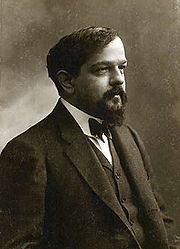 |
Achille-Claude Debussy 1862 - 1918Claude Debussy was born in Saint-Germain-en-Laye
France, the eldest of five children. His father owned a china shop and his
mother was a seamstress. Debussy began piano lessons when he was four
years old with an elderly Italian named Cerutti. At age of eleven, Debussy
entered the Paris Conservatoire.
|
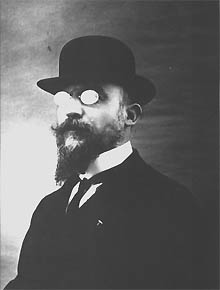 |
Alfred Éric Leslie Satie 1866 - 1925Erik Satie's was born in Honfleur, Basse-Normandie, France. When
he was four years old, his family moved to Paris, where his father Alfred
Satie,got a translator's job. After his mother Jane (Leslie Anton) died in
1872, he was sent, together with his younger brother Conrad, back to
Honfleur, to live with his paternal grandparents. In 1879 Satie entered
the Paris Conservatoire, where he was soon labelled untalented by his
teachers.
|
 |
Luigi Rodolfo Boccherini 1743 – 1805Boccherini was born in
Lucca,
Italy. At a young age his father, a cellist and double bass player, sent
Luigi to study in Rome. In 1757 he went to
Vienna
with his son where the two of them were employed by the court as musicians
in the Burgtheater. In 1761 Boccherini went to Madrid, where he was
employed by younger brother of King Charles III. There he flourished
under royal patronage, until one day when the King expressed his
disapproval at a passage in a new trio, and ordered Boccherini to change
it. The composer, was so irritated that he doubled the passage instead,
which led to his immediate dismissal. Then he accompanied by his patron
Don Luis to Arenas de San Pedro a little town at the Gredos mountains,
where he wrote many of his most brilliant works. Boccherini fell on
hard times following the deaths of his Spanish patron, two wives, and two
daughters, and he died almost in poverty, being survived by two sons.
|
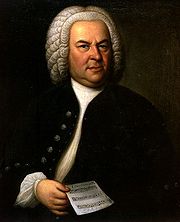 |
Johann Sebastian Bach 1685 – 1750Johann Sebastian Bach was born in Eisenach, Saxe-Eisenach Germany. He
was the youngest child of Johann Ambrosius Bach, the director of the
Stadtpfeifer or town musicians , and Maria Elisabetha (Lämmerhirt) Bach.
His father taught him to play violin and harpsichord. His uncles were all
professional musicians, whose posts ranged from church organists and court
chamber musicians to composers. One uncle, Johann Christoph Bach, was
especially famous and introduced him to the art of organ playing. At the
age of 14, Bach was awarded a choral scholarship to study at the
prestigious St. Michael's School in Lüneburg. In August 1703, he accepted
the post of organist at that Thuringia church, with light duties, a
relatively generous salary, and a fine new organ tuned to a modern system
that allowed a wide range of keys to be used. He took an unauthorized
absence for several months in 1705 ,to visit the great organ master
Dieterich Buxtehude. Bach walked some 400 kilometres each way to spend
time with the man he regarded as the father figure of German organists.
According to legend, both Bach and George Frederic Handel wanted to become
amanuenses of Buxtehude, but neither wanted to marry his daughter, as that
was a condition for the position. Bach died at the age of 65 caused
"from the unhappy consequences of the very unsuccessful eye operation". Johann Sebastian Bach - Jesu Joy of Man's Desiring Johann Sebastian Bach - Flute Sonata In E Flat Siciliano Johann Sebastian Bach - Ave Maria Johan Sebastian Bach - AIR Suite No 3
|
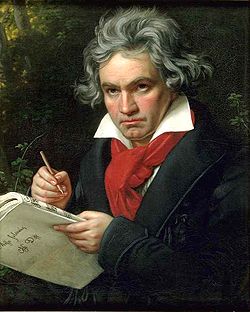 |
Ludwig van Beethoven 1770 – 1827Born in Bonn, then in the Electorate of Cologne in western Germany, he
moved to Vienna in his early twenties and settled there, he quickly gained
a reputation as a virtuoso pianist. Beethoven's hearing gradually
deteriorated beginning in his twenties, yet he continued to compose, and
to conduct and perform, even after he was completely deaf. Ludwig van Beethoven - Violin Concerto In D Op61 part3 Rondo Yehudi Menuhim violin Ludwig van Beethoven - Bagatelle In A Minor Ludwig van Beethoven - Romance In F Op 50 2
|
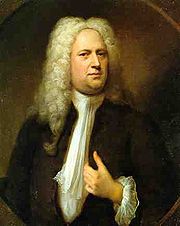 |
George Frideric Händel 1685 – 1759Born in Halle Germany, he spent most of his adult life in England, becoming a subject of the British crown. His works are strongly influenced by the techniques of the great composers of the Italian baroque era. George Frideric Händel - Water Music
From the film Four Weddings and a Funeral 1994
|
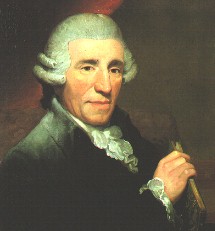 |
Franz Joseph Haydn 1732 – 1809Joseph Haydn was born in Rohrau, Austria, a village near the border with Hungary. His father was Mathias Haydn, a wheelwright who also served as "Marktrichter", an office akin to village mayor. Haydn's mother, the former Maria Koller, had previously worked as a cook in the palace of Count Harrach Haydn spent much of his career as a court musician for the wealthy
Hungarian Esterházy family on their remote estate. Isolated from other
composers and trends in music until the later part of his long life, he
was, as he put it, "forced to become original Franz Joseph Haydn - Trumpet Concerto In E Flat
|
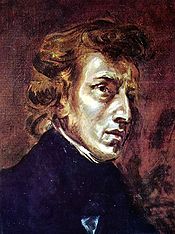 |
Fryderyk Chopin 1810-1849Chopin was born in Żelazowa Wola in Sochaczew County, part of the Duchy of Warsaw (Poland). Frederik Chopin - Variation on Rossini Cenerentola theme Frederik Chopin - Piano Concerto No1 In E Minor.mp3
|
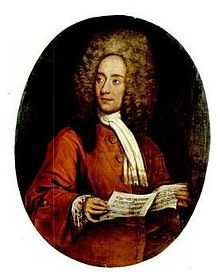 |
Tomaso Albinoni 1671 1751Was an Italian Baroque composer. Born in Venice, to Antonio Albinoni, a
wealthy paper merchant he studied violin and singing. Most of his
operatic works have been lost. However, nine collections of instrumental
works were published,99 sonatas, 59 concertos and 9 sinfonias. |
|